
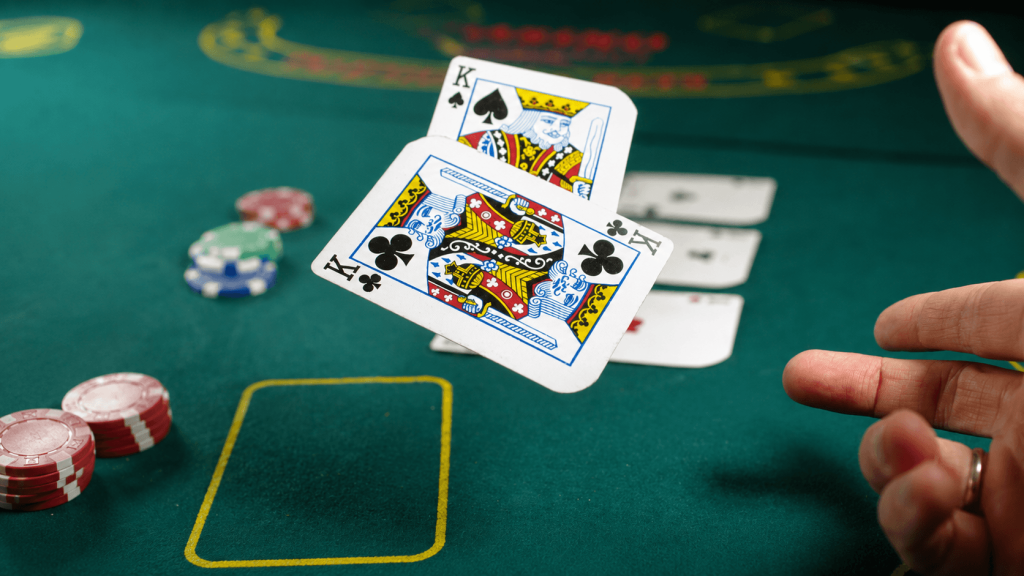
Imagine you’re sitting at a table, fully immersed in a game of Texas Hold’em, and your opponent has just pushed a mini mountain of chips into the middle of it. They’ve barely moved for the last 20 minutes. Now they’re staring at one particular spot on the felt, refusing to look at you. Is that confidence you’re picking up on? Or are they deliberately trying to look nervous because they know you’re watching? It can be tough to work out, but at least you’ve got some signs and behaviours to go on.
Now imagine the same hand online. Your opponent has a jumbled-up username with something silly like a cartoon shark or banana for a profile picture. Good luck reading their face.
Real money online video poker and live casino poker follow the same fundamental rules, but that’s where many of the similarities end. The pace changes, as does the information available to you. Bluffing is virtually impossible, and even something as basic as folding a bad hand becomes a different experience when you don’t have seven people physically watching you do it.
If you’ve only ever played one version of poker, moving to the other can be surprisingly strange. So here’s a rundown of what actually changes when poker moves from the casino floor to your screen.
Online Poker Removes the Faces, Not the Tells
One of the biggest myths about online poker is that you can’t read your opponents because you can’t see them. You absolutely can; you just have to read different things to what you normally would.
At a live table, players naturally look for physical information. How quickly did someone reach for their chips? Are their hands shaking? Have they suddenly stopped talking? Did they glance at their cards again when the flush draw arrived?
None of those clues exist online. Instead, you’re watching bet sizing, timing and patterns. Does someone almost instantly check every weak hand? Do they suddenly take much longer before making a large river bet? Have they raised from the button every time the action folds to them?
Online poker turns observation into something closer to pattern recognition. And don’t assume the player taking 20 seconds to call is necessarily agonizing over your bet. They might be playing at another table, they might be making coffee, or their dog might have just knocked something over—not every “tell” is actually telling you anything.
Bluffing Feels Very Different When Nobody Can See You
Bluffing in a casino can feel incredibly personal. You’re sitting three feet away from someone trying to convince them that your worthless cards are the nuts.
You need to control your behavior while watching theirs. Some players become unusually chatty when bluffing. Others freeze. Experienced opponents may even deliberately give off false tells.
Online, all of that disappears. You can make a huge bluff while sitting on your couch eating cereal in your pajamas. Nobody cares what your face is doing.
But your betting still needs to tell a believable story. If you check the flop, make a tiny turn bet and suddenly launch an enormous river bet, a good opponent will wonder what hand you’re realistically representing.
Overall, online bluffing is less about looking convincing and more about betting convincingly.
Online Poker Moves Fast. Really Fast.
Live poker contains a lot of waiting. Cards need to be shuffled, chips counted and someone inevitably spends three minutes deciding whether to call a $20 bet.
Online software handles most of that instantly. Cards appear, bets are calculated automatically and the next hand can begin almost immediately, meaning you’ll generally see far more hands per hour.
Then there’s multi-tabling. Experienced online players might have several tables open simultaneously. Try doing that in a Las Vegas poker room and security will probably have questions.
More hands also mean more opportunities to make mistakes, so beginners may want to stick with one table until the faster pace feels comfortable.
Live Poker Is a Much More Social Game
Live poker has characters. There’s the player who wants to tell you about every hand they’ve ever lost. The quiet regular who knows everyone in the room. Then there’s the player who announces they’re leaving after every orbit and is somehow still there four hours later.
That social environment influences the game. People become impatient, rivalries develop and someone you’ve just bluffed might desperately want their chips back. Online poker strips most of that away. You’re fundamentally playing against usernames and avatars.
Some players love having no awkward conversation or opponent staring into their soul for 90 seconds. Others would argue that removes half the fun.
It’s Easier to Hide Your Emotions Online
Lose a monster pot at a casino table and everybody gets to watch your reaction. Online, you can swear at your laptop and nobody knows. That doesn’t mean opponents can’t spot when you’re on tilt.
Suddenly raising every hand after a bad beat can broadcast your frustration just as clearly as angrily shuffling your chips. You’re simply revealing it through your betting instead of your body language.
Online Poker Gives You More Data
After several hours at a live table, you might remember that Seat 4 seems aggressive and Seat 7 hasn’t played a hand since approximately Christmas. Online poker, however, can be much more analytical.
Depending on the platform and rules, players may have access to hand histories, notes and statistics that make spotting patterns easier. Your opponents can study you too. How frequently do you raise from a particular position? Does your bet sizing follow a recognizable pattern? The screen removes physical information but can make betting behavior easier to track.
Your Bankroll Can Feel Different Online
Push $200 of physical chips into the middle of a poker table and you can see exactly what you’re risking. Click a button online and that same $200 can look very different after a few minutes of sitting in your casino bankroll.
That can make money feel less tangible, particularly when you’re flying through hands or switching tables. Decide your limits before playing rather than waiting for your balance to tell you when you’ve had enough.
So, Which Version Should You Play?
Neither version is automatically easier. Live poker tests your patience, ability to read people and comfort under pressure. Online poker replaces much of that with speed, volume, betting patterns and data.
If you love the psychology, conversations and strange behaviors that emerge around a poker table, live poker is difficult to replace. There’s something uniquely satisfying about bluffing somebody sitting directly opposite you.
If you prefer faster games and the convenience of playing without traveling to a casino, online poker has obvious advantages.
The skills overlap without being identical. A great live player might initially struggle online without their physical reads, while an online regular may find being studied face-to-face an entirely different kind of pressure.
Same cards. Same hand rankings. Same objective. But once those cards leave the felt and appear on a screen, poker becomes a surprisingly different game.
